
Driving Recovery Forward
Transportation is one of the most persistent barriers faced by individuals in early recovery. Whether it’s getting to treatment, attending appointments, job interviews, or essential services, unreliable transportation can stand in the way of real progress. At Sunstone, we recognized this challenge early on—especially within our own recovery housing community—and decided to do something about it.
That decision led to the creation of Hope on Wheels – Hamilton County, developed in collaboration with the original Hope on Wheels program based in Portage County, Ohio and our consultant Hope Town. This local initiative was designed to eliminate transportation barriers for our residents while creating meaningful opportunities for growth, healing, and independence.
From Idea to Impact
Hope on Wheels began when we saw how often residents were forced to rely on outside Non-Emergency Medical Transportation (NEMT) providers—many of which were unreliable. Missed pickups, long wait times, and late arrivals were all too common. And when someone in early recovery is trying to stay on track, something as seemingly simple as a missed ride can have a ripple effect on their stability and self-esteem.
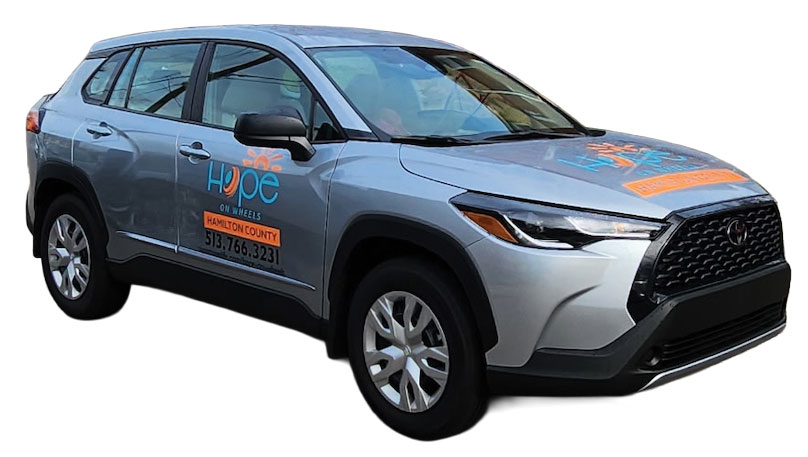
We launched Hope on Wheels with two vehicles dedicated solely to transporting Sunstone residents. From the start, the impact was immediate. No more missed treatment sessions. No more scrambling for a ride to an interview. No more unnecessary setbacks caused by transportation failures.
Certified and Compassionate
With official approval as a Medicaid-certified NEMT provider, Sunstone can now directly transport residents to outpatient services, medical appointments, the Life Learning Center for job readiness support, and more. It’s not just about getting people from point A to point B—it’s about ensuring their recovery journey stays in motion.
And what makes Hope on Wheels even more unique? The people behind the wheel.
Built By and For People in Recovery
Several of our drivers are Sunstone residents or alumni who hold valid driver’s licenses. Many have faced the exact same transportation struggles themselves, which makes them especially compassionate and dependable in this role. This shared understanding creates a level of empathy and accountability that you don’t typically find in outside providers.
Not only do these positions provide part-time employment and financial stability, they offer a sense of purpose. For individuals in recovery, being trusted with a responsibility like this can be a critical step toward long-term success.
A Road to Employment
Hope on Wheels is more than a transportation program—it’s a launching pad for careers.
In our ongoing effort to build sustainable job pathways, Sunstone has established a direct partnership with United Courier Service, one of the region’s respected courier companies. Thanks to this partnership, one of our residents who began as a Hope on Wheels driver is now employed full-time as a medical courier. That job offers reliable income, a professional reference, and a clear path to future housing and independence.
We hope to grow this model—where transportation support leads to job readiness, which leads to long-term employment and self-sufficiency.
Recovery in Motion
At Sunstone, everything we do is centered on helping people build stronger, healthier, more independent lives. With Hope on Wheels, we’re proud to offer more than just a ride—we offer momentum, dignity, and a chance to move forward with confidence.